House Clearance Osterley — Health & Safety Policy
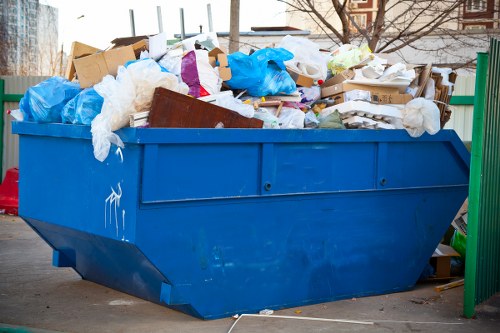 House Clearance Osterley is committed to providing a safe working environment for its staff, contractors and members of the public affected by our operations. This health and safety policy sets out the standards and procedures that guide our waste removal and rubbish collection services across the service area. It applies to all house clearance, estate clearances, and general rubbish removal tasks carried out by the company.
Our aim is to prevent injury, ill health and damage to property by identifying hazards, assessing risks and applying appropriate control measures. This policy complements statutory requirements and good practice for rubbish disposal and waste clearance. Every member of the team is expected to understand and implement the policy as part of their daily duties.
 The scope covers domestic and light commercial clearances, including furniture removal, electrical appliances, bulky waste and recyclables. It also covers the planning, transportation and temporary storage of waste during projects. Rubbish removal Osterley operations must be planned and supervised to ensure safe handling and lawful disposal of all waste types.
Responsibilities and Duties
The company director holds overall responsibility for health and safety and will ensure adequate resources and training are provided. Supervisors must enforce safe systems of work on site and during vehicle operations. All employees are required to cooperate with this policy and report hazards or incidents immediately.
Key responsibilities include:
- Management: maintain risk assessments and safe work procedures for each clearance project.
- Supervisors: ensure correct PPE, tools and handling methods are used.
- Employees: follow instructions, use equipment safely and report unsafe conditions.
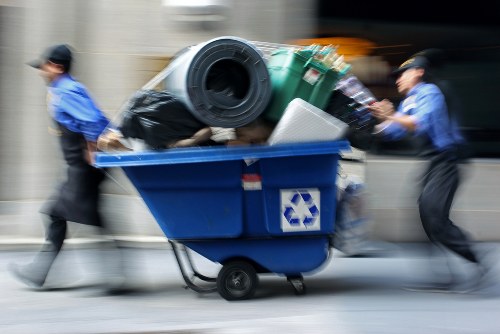 For Osterley house clearance teams, training in manual handling, safe lifting techniques and the correct use of trolleys and lifting aids is mandatory. Training records are kept and refreshed regularly. Where specialist tasks are required (for example, appliance disconnection or working at height), only competent personnel or approved contractors will undertake the work.
Risk Assessment, Hazard Control and PPE
Before any clearance begins a site-specific risk assessment must be completed. Typical hazards include manual handling injuries, slips and trips, exposure to sharps or biological waste, hazardous materials (chemicals, batteries, asbestos suspects) and vehicle movements. The assessment will determine control measures such as segregation of waste, mechanical aids and exclusion zones.
 Personal protective equipment (PPE) is provided and must be used where required: gloves, high-visibility clothing, safety footwear, and eye protection. Additional equipment such as respirators or asbestos-rated masks will be supplied when identified as necessary by risk assessment. PPE usage is enforced and supervisors will monitor compliance.
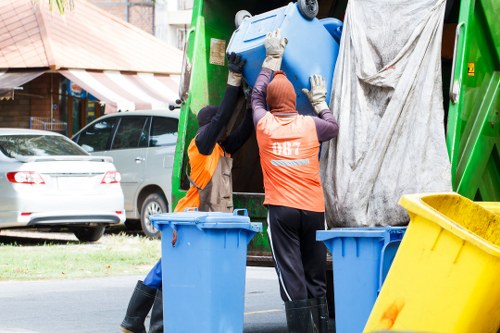 For hazardous or suspect waste encountered during clearances, the process is:
- Stop work in the affected area if the hazard presents immediate risk.
- Isolate and cordon off the item or area.
- Seek specialist assessment for asbestos, chemical spills, or biological contamination.
- Ensure lawful and safe disposal through licensed waste carriers where required.
Vehicle safety and secure loading are integral to our rubbish collection services. Drivers must ensure loads are safely restrained, weight limits are observed and vehicles are maintained in a roadworthy condition. Manual handling procedures are designed to minimize lifting and twisting; mechanical aids are used for heavy or awkward items. All vehicles are stocked with spill kits and first aid supplies.
Incident reporting and investigation procedures are in place to record accidents, near misses and dangerous occurrences. These records are reviewed to identify trends and drive improvements. The policy emphasises a culture of learning rather than blame so that safety improvements can be implemented effectively across the service area.
Monitoring, review and continual improvement are core to the policy. Regular audits, toolbox talks and site checks will be conducted. The policy is reviewed at least annually or after a significant incident, change in operations, or regulatory update. Contractors and temporary staff will be inducted before they begin work and must comply with this policy while on site.
Emergency arrangements include clear procedures for first aid, fire response and contacting emergency services. Supervisor responsibilities include ensuring access routes are kept clear for emergency vehicles and that staff know evacuation and rendezvous points. All staff will receive training on emergency protocols pertinent to clearing and transporting waste.
Compliance with environmental controls is also part of the safety policy: waste separation, minimizing fly-tipping and reducing contamination risks protect both people and property. Our approach to waste clearance balances efficiency with strong safety controls to protect operatives, clients and the wider community.
Signature and approval: This policy is approved by company leadership and is issued for implementation across our rubbish removal operations. It will be made available to all employees and reviewed periodically to ensure it remains effective, practical and compliant with applicable health and safety requirements.